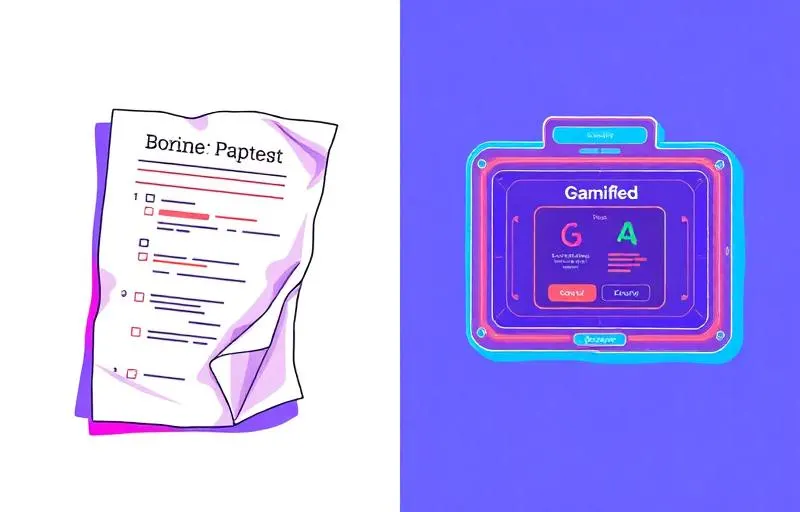
Imagine a hiring scene not of paper forms or coded games, but of candidates immersed in rich virtual worlds. In today's rapidly evolving workplace, companies are reimagining how to find and nurture talent. Traditional methods – static psychometric questionnaires, quick mini-games or surveys – are increasingly seen as too limited: they often capture only a narrow slice of a person's abilities, lack real-world context, and can feel abstract or irrelevant to candidates. As one industry report notes, many organizations are now "rethinking their hiring processes" and even placing game-based assessments on par with resumes and interviews. The promise is clear: more engaging, fairer, data-driven tools. But to make good on that promise, talent leaders must go beyond surface-level gimmicks. In this article we explore the current gaps in assessment, the rise of gamified testing, and a new frontier of narrative-rich simulations – with insights from HR and EdTech alike – that may finally unlock deeper signals of potential.
Limitations of Current Assessments
Traditional assessment tools – from personality surveys to cognitive quizzes – have well-documented shortcomings. By design, paper-and-pencil tests and mini puzzles evaluate narrow traits or skills without context. A static psychometric score explains only 10–20% of on-the-job performance variance. In practice, that means a lot of nuance is lost: motivation, real-world problem-solving, and social skills are all hard to gauge on a checkbox form. These tests capture how someone feels or thinks at one moment, not how they'll act in a complex situation. They can also introduce bias: cultural or educational background may skew results, and over-reliance on any single test can disadvantage diverse candidates.
Moreover, candidates often find conventional assessments tedious or opaque. Nearly half of job applicants say the hiring process already feels too long, and many question why they're asked to click through irrelevant tasks. When tests are too abstract (for example, pattern-recognition puzzles that have no clear link to any job), candidates raise "face validity" concerns: they wonder how a random maze or math mini-game relates to any real role. The result is fatigue and even gaming of the system – surveys show 30–50% of candidates admit cheating on pre-employment tests. In short, the status quo often fails to engage people or reveal their true strengths. Traditional metrics simply aren't deep enough for today's talent needs.
The Rise of Game-Based Assessments – Pros and Cons
In response to those gaps, game-based assessments have surged in popularity. These are not the simple pop quizzes of old, but carefully designed games or simulations that embed test items in an interactive format. By turning tests into play, employers hope to boost engagement and reduce anxiety. Indeed, research confirms that well-designed game assessments can lower stress and increase authenticity. One field study found that candidates reported high satisfaction with game formats, and anxiety did not undermine performance the way it can in a dull test. In practice, companies like Unilever, Google and IBM have used gamified challenges (for example, coding puzzles or attention tasks) to make hiring more engaging. Candidates often prefer game-based tasks to bland forms: one survey found a majority of younger applicants said they liked game tests over straight quizzes.
Psychometrically, these games can also be predictive. Game tasks built on cognitive and behavioral science often match or exceed traditional tests in validity, and they produce a wealth of fine-grained data on decision patterns. In short, gamification can deliver high predictive accuracy while making the process feel fairer and fun.
However, the hype around game assessments comes with caveats. Many early game-based tools simply recast old tests in new skins, without context. If the game mechanics are too simplistic or disconnected, candidates may still balk. A recent industry analysis warns that hundreds of "gamified" hiring games lack clear validity – and poor design can even introduce new biases. Technical glitches can frustrate users, and without transparency, candidates may again suspect hidden agendas. And tellingly, just as with older tests, cheating remains a concern: one report found up to 50% of applicants admitted gaming the system on pre-hire puzzles. So while gamification raises the bar, it isn't a magic bullet. The real shift will come from going beyond token games to immersive, job-relevant simulations.
Towards Narrative, Immersive Evaluations
A new approach is emerging: instead of isolated puzzles, some platforms are placing candidates in story-driven simulations. In these scenarios, users navigate a believable environment, make open-ended choices, and solve problems that mirror real work contexts. This adds narrative and meaning to the assessment. For example, one career-assessment game leads participants through a fictional company, where they decide whether to help a colleague organize data or join a marketing brainstorm. Each choice subtly reveals personality and interests: someone drawn to analytical tasks shows an "Investigative" bent, while another who picks creative planning may be "Artistic". Importantly, such scenarios feel more natural and engaging – research shows immersive settings reduce pressure and elicit more genuine reactions.
Some companies are already exploring this. Central Test's Immersion tool, for instance, uses story-based mini-scenarios (an electric bike company with tasks in design, marketing, service, etc.) to uncover true career interests. Rather than ask "Do you like numbers?", it has players choose tasks in context and reports back on what really motivates them. The result is a profile of strengths and passions that aligns with real-world roles. Likewise, startups like Talero have begun prototyping fully narrative career games. Talero's demo, for example, has users explore an interactive adventure where every path counts: if a player turns down a burning field to join a party path, that signals openness and social drive. The platform uses AI to adapt the story in real time, ensuring no two experiences are identical and making cheating practically impossible. In short, these tools show what's possible: by embedding assessments in rich stories, they can capture decision-making in context, not just isolated skills.
Of course, this approach raises its own challenges. Designing valid, scalable scenarios is hard work, and "serious games" must still answer to psychometric rigor. But early results are promising. Interviewed users often report greater clarity and confidence: playing out potential job situations helps them see their own fit for different paths. And because the tasks mirror life, employers gain insight into behaviors like problem-solving style, teamwork and initiative – signals that flat tests miss.
HR Perspective: Deeper Signals and Fairer Data
HR leaders are demanding more than ever from assessment technology. With talent shortages biting, they need deeper early signals of potential rather than waiting months on conventional metrics. Immersive simulations can help by revealing soft skills and natural inclinations before a candidate's resume catches up. For example, a simulation might highlight a candidate's leadership style in action, not just rely on a checkbox. As one expert notes about the field's status quo: even well-designed psychometric tests typically explain only 10–20% of performance variance. That's hardly sufficient to confidently identify tomorrow's stars. By contrast, narrative assessments can capture broader behaviors. Firms like Deloitte and EY have begun using custom simulations (e.g. a business strategy game or a leadership challenge) to pick up on potential that traditional screening misses. In one striking case, integrating game-based scenarios doubled a client's female hire rate by illuminating talent that old tests had overlooked.
Bias mitigation is another key HR concern. Game-based tools have the potential to be fairer – for instance, one validated gamified cognitive test (with fairness-optimized AI) showed no significant gender gaps in scores. In practice this means carefully designing games (and scoring them with machine learning) can reduce cultural and gender biases inherent in rote tests. However, HR must be vigilant: as with any tool, biases in game design or unequal tech access can creep in. Thoughtful implementation is key: ensuring games reflect the actual job context (for example, a retail simulation for a sales role) helps maintain "face validity" and keeps candidates engaged. In short, HR leaders see narrative assessments as a way to get richer data earlier – but they're also calling for transparency and validation. They will watch to ensure these new tools truly measure potential, not proxies, and that they mesh with fair hiring practices.
EdTech Perspective: Engaging Students and Clarifying Career Paths
In education and career guidance, the value of games is equally clear. EdTech professionals know that engagement is half the battle in learning. Studies confirm that digital educational games significantly boost students' motivation and engagement. When learners play a career exploration game, they invest more attention and have fun discovering themselves. For example, research found that gamified learning can turn a passive career test into an active exploration, leading to higher motivation for learning and exploration. This matters, because engaged students are more likely to absorb the results and act on them.
Moreover, interactive career tools can build confidence and clarity. Career counselors long ago found that even traditional programs help students feel more prepared: one nursing education study noted that career guidance increased students' confidence in their career decisions and simplified their planning. Narrative simulations can amplify this effect. By "trying on" roles in a story, students see where they thrive. For instance, in a story-based career tool, a student might discover she loves leading a team in a simulated project, revealing latent "Enterprising" interest she hadn't considered. This not only engages her (she's literally playing to learn), but also makes her more sure of what fields to pursue. The task feels like a game, not a judgment, so students often respond more honestly about what excites them. Over time this builds self-confidence: they stop saying "I don't know what I want," because the immersive scenario has shown them concrete examples of work they enjoy.
Looking ahead, schools and career platforms are likely to blend these techniques. Imagine a high school aptitude game that places a student in a startup's storyline – the student makes design, marketing or coding choices, and the game gives feedback on strengths. By connecting play with insights, these tools help learners move from uncertainty to informed decisions. As one study concludes, educational games coupled with supportive environments can "simplify career decisions" and better prepare students for the job market. EdTech developers will watch for ways to scaffold narrative assessments with coaching, to maximize both engagement and real-world applicability.
Game-Based Assessment Perspective: From Micro-Games to Full Simulations
Even within the game-assessment community itself, the paradigm is shifting. Early gamified tests focused on micro-tasks – quick puzzles to measure memory, attention or basic reasoning. These have value, but they capture a thin slice of behavior. The future lies in contextual, behavior-rich simulations. As industry experts advise, the best game assessments now "immerse individuals in simulated environments that reflect real-world challenges". In practice, this means moving from single-function tasks to multi-stage scenarios. For example, rather than a standalone math game, a retail-simulation game might require the player to do some math while also interacting with a virtual customer. A true full-game assessment could combine puzzles, decision points and narrative choices all in one experience.
Leading innovators are already going this route. Companies like Zappos and PwC have created interactive games that test culture fit and communication in lifelike settings. Virtual reality is now entering the arena too: VR simulations can place candidates in a simulated workday and track their responses in real time. Even in classical desktop games, the message is clear: make the task job-relevant and fair. One review stresses designing each game around the target role ("whatever you do, it should have face validity"). Accessibility is also key – platforms must ensure that controls or interfaces don't disadvantage any group.
The evidence is mixed but evolving. Meta-analyses show that well-constructed game assessments can rival traditional tests in validity. Critics point out that the gamified approach must still prove its predictive power and not overemphasize "soft" over hard skills. But practitioners believe the benefits are already outweighing the risks. By capturing rich behavioral data in context, narrative assessments promise a fuller picture of the candidate than any quiz. They offer a potential "magnifying glass" on traits like adaptability, creativity and leadership that simply weren't observable in a multiple-choice format.
Conclusion: The Road Ahead for Talent Assessment
Looking forward, the talent discovery space will continue blending technology with human insight. We expect AI-driven personalization, where each candidate's journey is dynamically tailored in real time (as early prototypes like Talero already do). Immersive technologies such as VR and augmented reality will become more common, especially for high-stakes roles that benefit from realistic simulations. At the same time, organizations and regulators will scrutinize these tools: fairness, transparency and data security will be top priorities. Decision-makers should watch for tools that not only engage, but also demonstrate clear validity – for example, those that link game-derived insights to later performance. They should also demand inclusive design (for example, the same scenario should be understandable by all genders and cultures).
In summary, the future of talent assessment is holistic and experiential. No longer will firms rely on disembodied metrics alone. Instead, expect a continuum of methods – from short games to full-scale narratives – all aimed at understanding who a person is and might become in a role. By focusing on decision-making and behavior within context, new assessments promise deeper signals (for HR), greater engagement (for educators and youth), and ultimately, a more human-centered path to finding the right fit. The road ahead is both exciting and complex: talent leaders will need to balance innovation with rigor, but the potential payoff is huge. In this changing landscape, the rule of thumb will be to look for tools that treat candidates not just as data points, but as people making choices in stories – a change that could transform how we discover and develop talent across industries.
References
- Industry reports on the limitations of traditional psychometric tests and their predictive validity
- Research studies on game-based assessment effectiveness and candidate satisfaction
- Case studies from companies implementing narrative-driven simulations for talent assessment
Ready to experience career discovery the way it should be?
Play Talero Now