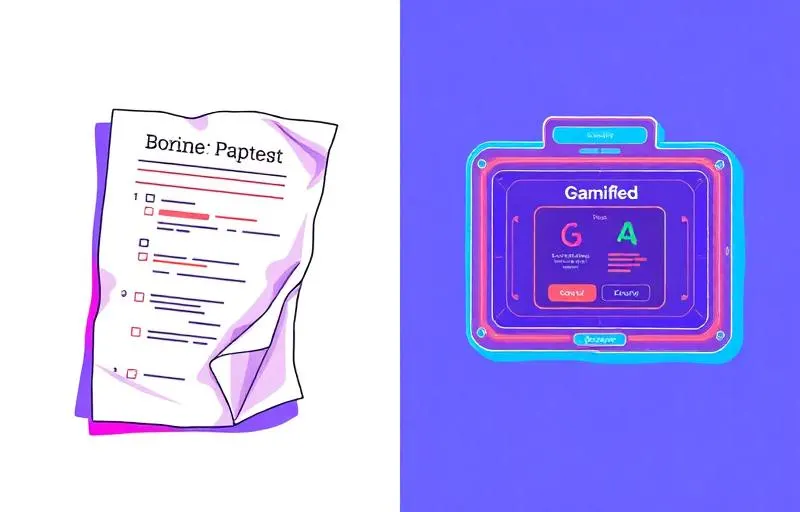
Educational institutions are increasingly exploring innovative tools to better support students in career guidance. Traditional assessments often fall short in engagement, personalization, and long-term utility. Talero, a gamified and AI-powered assessment platform, offers an experiential alternative. Grounded in established research on educational psychology, gamification, and career development, this article explores how and why platforms like Talero could enhance institutional outcomes and student success.
Gamification Boosts Engagement and Learning
Gamification refers to integrating game mechanics (e.g. levels, points, challenges) into non-game contexts to improve engagement. In educational settings, this approach has been shown to increase motivation, time-on-task, and retention.
For example, Boston University's career services embedded gamified modules into career education and saw substantial increases in student participation with resources that were previously underused (Khatrichettri & Maida, 2025). Similarly, studies show gamified environments promote more effective exploration of career paths and lead to broader awareness of available occupations (Keller et al., 2023).
Unlike static surveys or traditional lectures, game-based platforms create low-pressure, self-paced spaces where students learn by doing. This supports the active learning principles found to improve long-term retention and self-confidence.
AI Personalization Enhances Scale and Precision
AI systems in career platforms enable dynamic feedback and personalized pathways. Rather than a one-size-fits-all result, students receive tailored insights based on their interactions, personality traits, and skill demonstrations. AI also scales well: it can support hundreds or thousands of students simultaneously, adapting in real-time to each user.
Research highlights the promise of AI-powered assessments to extend the reach of overburdened career services and provide data-informed recommendations (West & Vos, 2024). Moreover, studies in adaptive gamified systems show they promote learner engagement and achievement by maintaining an optimal challenge level (Shute & Moore, 2017).
For schools and universities, this means more efficient career counseling, more equitable support across different student groups, and actionable analytics to improve programming.
Grounded in Validated Psychological Theory
Talero's structure is informed by the Holland RIASEC model (person-environment fit) and Big Five personality theory. Both models are empirically validated and widely used in career counseling.
In addition, game-based career guidance supports students' development of self-efficacy — their belief in their ability to succeed — which research identifies as a strong predictor of academic and career persistence (Bandura, 1986).
Institutional Benefits
Schools and universities adopting platforms like Talero benefit in several ways:
Crucially, gamified platforms lower the barrier to entry for career exploration. Students who might otherwise avoid or delay career planning can engage more easily in a game format, giving institutions a new tool to reach and support them early and consistently.
Conclusion
Game-based, AI-driven platforms like Talero align with the latest research in education, psychology, and career development. By offering interactive, personalized, and research-backed experiences, they help institutions scale career support, improve student outcomes, and modernize their approach to preparing young people for the future of work.
References
Ready to experience career discovery the way it should be?
Play Talero Now