Have you ever sat through a 100-question career aptitude test, only to receive a result like "You'd make a great accountant or park ranger"? You're not alone. For decades, schools and universities have relied on static questionnaires to help students choose career paths. But today's learners — Generation Z — are growing up in a world that moves fast, thinks visually, and expects interactivity. The question is: why are we still using tools that were designed for their grandparents?
The Limits of One-Size-Fits-All Assessments
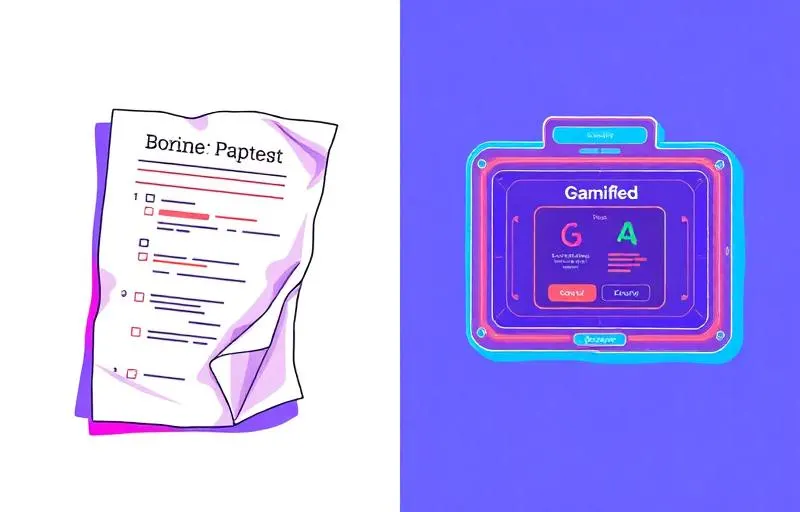
Traditional career tests typically rely on self-reported preferences. You answer questions like: "Would you rather work with people or data?" These tools assume that you already understand yourself well enough to describe your preferences accurately. But research consistently shows that this is often not the case.
According to a meta-analysis by Morgeson et al. (2007), self-report measures frequently suffer from social desirability bias — people answer how they think they should, not how they actually feel or act. Moreover, Holland's RIASEC model (Realistic, Investigative, Artistic, Social, Enterprising, Conventional), which underlies many popular tests, was developed in the 1950s. The world of work has transformed dramatically since then.
Engagement and Validity: The Gen Z Problem
Gen Z is not simply younger — they think and learn differently. Research from the American Psychological Association (2018) notes that today's teens spend more time on screens, expect gamified experiences, and are less tolerant of passive content. A paper-based or text-heavy survey feels foreign, even boring.
When students are disengaged, their responses become unreliable. A study in the Journal of Applied Psychology found that low motivation during assessments significantly reduced predictive validity (Salgado & Táuriz, 2014). In other words, bored students give random answers, and random answers produce useless results.
Outdated Frameworks, Modern Careers
Many career tests were built before the internet existed. They struggle to account for modern roles like UX designer, data scientist, influencer marketing manager, or sustainability consultant. The U.S. Bureau of Labor Statistics estimates that 65% of children entering school today will eventually work in jobs that don't yet exist. How can a 1970s-era questionnaire prepare them for that future?
Moreover, jobs themselves are changing. The World Economic Forum's Future of Jobs Report (2023) highlights that critical thinking, emotional intelligence, and adaptability are now more valuable than technical knowledge alone. Traditional career tests rarely measure these dynamic traits.
A New Approach: Behavior Over Questions
The future of career guidance lies in observing what people do, not just what they say. Behavioral and game-based assessments place users in interactive scenarios that feel like play but measure real cognitive and emotional traits.
Platforms like Pymetrics, Knack, and Arctic Shores have already proven that game-based assessments can outperform traditional tests in predicting job success and reducing hiring bias. Research in Nature Human Behaviour showed that behavioral measures captured variance in personality traits beyond what surveys could detect (Youyou et al., 2015).
When students engage with a story, make decisions under pressure, and interact with characters, they reveal authentic patterns — how they negotiate conflict, approach risk, or collaborate with others. This data is far richer than a self-assessment scale.
References
References
- American Psychological Association. (2018). Stress in America: Generation Z. Washington, DC: APA.
- Morgeson, F. P., Campion, M. A., Dipboye, R. L., Hollenbeck, J. R., Murphy, K., & Schmitt, N. (2007). Reconsidering the use of personality tests in personnel selection contexts. Personnel Psychology, 60(3), 683–729.
- Salgado, J. F., & Táuriz, G. (2014). The Five-Factor Model, forced-choice personality inventories, and performance: A comprehensive meta-analysis of academic and occupational validity studies. European Journal of Work and Organizational Psychology, 23(1), 3–30.
- World Economic Forum. (2023). Future of Jobs Report 2023. Geneva: WEF.
- Youyou, W., Kosinski, M., & Stillwell, D. (2015). Computer-based personality judgments are more accurate than those made by humans. Proceedings of the National Academy of Sciences, 112(4), 1036–1040.
Ready to experience career discovery the way it should be?
Play Talero Now