A Hidden Crisis in the Workforce
Globally, millions of people end up in the wrong job — and it's costing more than just morale. According to Gallup, a staggering 85% of employees worldwide are either not engaged or actively disengaged at work, a figure that represents lost productivity on a massive scale (Gallup, 2023). Disengagement in the workplace is linked to poor performance, high turnover, and low innovation.
What's more, hiring the wrong person is expensive. The U.S. Department of Labor estimates that a single bad hire can cost up to 30% of the employee's first-year earnings in lost productivity, rehiring costs, and disruptions (USDOL, 2022). The core issue isn't a lack of talent — it's that most people never had the chance to properly discover what they're good at, or how to match that with meaningful work.
Young People Are Struggling to Find Direction
The problem starts early. A 2022 survey by YouScience found that 72% of high school graduates felt underprepared to make career decisions, and 42% said they lacked confidence in the career path they had chosen (YouScience, 2022). Similarly, OECD research shows that around 40–45% of students near graduation remain unclear about their future career goals (OECD, 2021).
This uncertainty translates into costly missteps — students switching majors, enrolling in degrees that don't align with job market demand, or drifting into fields that don't suit their strengths. It also perpetuates inequalities: young women, for instance, consistently underestimate their strengths. Only 1.5% of 15-year-old girls across OECD countries aspire to work in ICT, compared to 10.5% of boys — despite similar abilities (OECD, 2020).
Without effective tools for self-discovery, many students and early professionals make decisions in the dark.
Traditional Career Tests Are Outdated
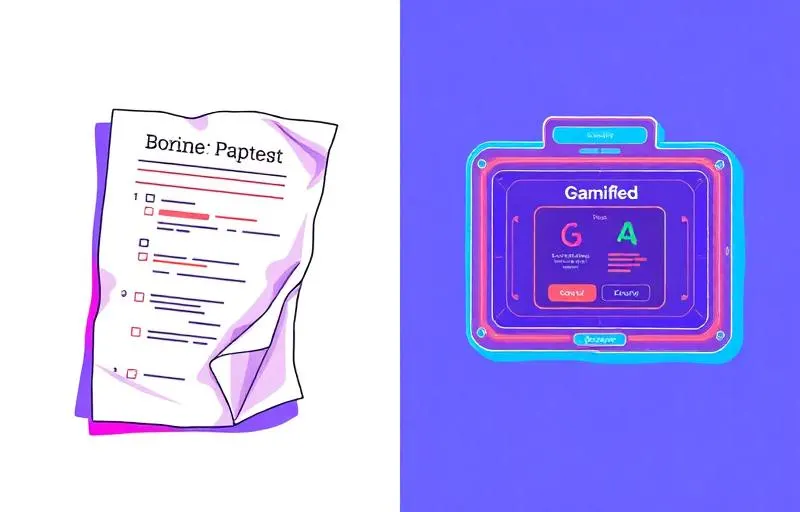
Despite this urgent need for better guidance, most career tools remain rooted in outdated models. Many schools and institutions still use pen-and-paper interest inventories or static personality quizzes, many of which were developed decades ago. These tests tend to offer vague recommendations ("You're an extrovert — try sales") and rely on self-reported answers, which are prone to bias and social desirability effects (Pittenger, 2005).
Moreover, traditional tests often fail to capture critical 21st-century traits like emotional intelligence, adaptability, or digital fluency. They reduce individuals to labels instead of highlighting their dynamic strengths. These tools also struggle to engage Gen Z, who expect interactive, technology-driven experiences. As a result, students either don't take the tests seriously or ignore the outcomes altogether.
Why Now? The World of Work Is Changing Fast
1. From Degrees to Skills
Employers around the world are shifting to skills-based hiring. According to a 2023 report by the World Economic Forum, companies increasingly value what candidates can do over what credentials they hold (WEF, 2023). Governments are following suit: more than 20 U.S. states have eliminated degree requirements for many public-sector jobs to widen access (NPR, 2023).
This trend creates opportunities — but only for those who can demonstrate their skills. That demands better tools for surfacing hidden strengths early and aligning them with real job needs.
2. AI and VR Are Transforming Assessment
Artificial intelligence and immersive technologies are reshaping how employers and educators evaluate potential. Companies like Unilever, PwC, and Accenture now use game-based assessments and virtual job simulations during hiring. A study in Harvard Business Review found that AI-enabled simulations reduced hiring bias and improved job performance prediction (Chamorro-Premuzic et al., 2019).
At the same time, VR and gamified assessments are increasingly used in education and onboarding. Walmart, for instance, deployed VR for training and saw measurable improvements in learning outcomes and confidence (Harvard Business Publishing, 2021). These tools aren't just engaging — they enable fairer, behavior-based evaluations of soft skills and problem-solving ability.
3. Demand for Ethical and Inclusive Tools
In parallel, there's growing scrutiny of algorithms and assessments. Biased resume screeners and AI tools have led to real-world discrimination. Regulators and institutions are now calling for more ethical, explainable AI in hiring and education (AI Now Institute, 2022). The best career discovery systems will be transparent, equitable, and inclusive by design, empowering people rather than filtering them out.
The Opportunity
We are at an inflection point. The demand for career tools that are personalized, engaging, and scientifically valid has never been higher. Yet most institutions still rely on outdated tests and guesswork.
Innovative, research-backed approaches now exist to help people of all ages discover their potential — using gamification, behavioral analysis, and adaptive AI. These tools can replace static forms with interactive journeys of self-discovery, especially important for students and job-seekers who don't see themselves reflected in traditional models.
The opportunity isn't just to fix career matching. It's to unlock human potential at scale, improve workforce productivity, and give every person a fairer shot at meaningful work.
References
References
- Gallup. (2023). State of the Global Workplace: 2023 Report. https://www.gallup.com/workplace/349484/state-of-the-global-workplace.aspx
- U.S. Department of Labor. (2022). Hiring Costs and Turnover Benchmarks. https://www.dol.gov
- YouScience. (2022). Post-Secondary Readiness Report. https://www.youscience.com/resources/post-secondary-readiness-report/
- OECD. (2020). Dream Jobs: Teenagers' Career Aspirations and the Future of Work. https://www.oecd.org/education/dream-jobs-teenagers-career-aspirations.htm
- OECD. (2021). Career Ready? How Schools Can Better Prepare Young People for Working Life. https://www.oecd.org/education/career-readiness
- Pittenger, D. J. (2005). Cautionary comments regarding the Myers-Briggs Type Indicator. Consulting Psychology Journal, 57(3), 210–221. https://doi.org/10.1037/1065-9293.57.3.210
- World Economic Forum. (2023). Future of Jobs Report 2023. https://www.weforum.org/reports/future-of-jobs-report-2023
- NPR. (2023). Why More States Are Dropping Degree Requirements for Jobs. https://www.npr.org
- Chamorro-Premuzic, T., Akhtar, R., Winsborough, D., & Sherman, R. A. (2019). The Talent Delusion: Why Data, Not Intuition, Is the Key to Unlocking Human Potential. Harvard Business Review Press.
- AI Now Institute. (2022). Algorithmic Accountability in Hiring and Education. https://ainowinstitute.org
Ready to experience career discovery the way it should be?
Play Talero Now